

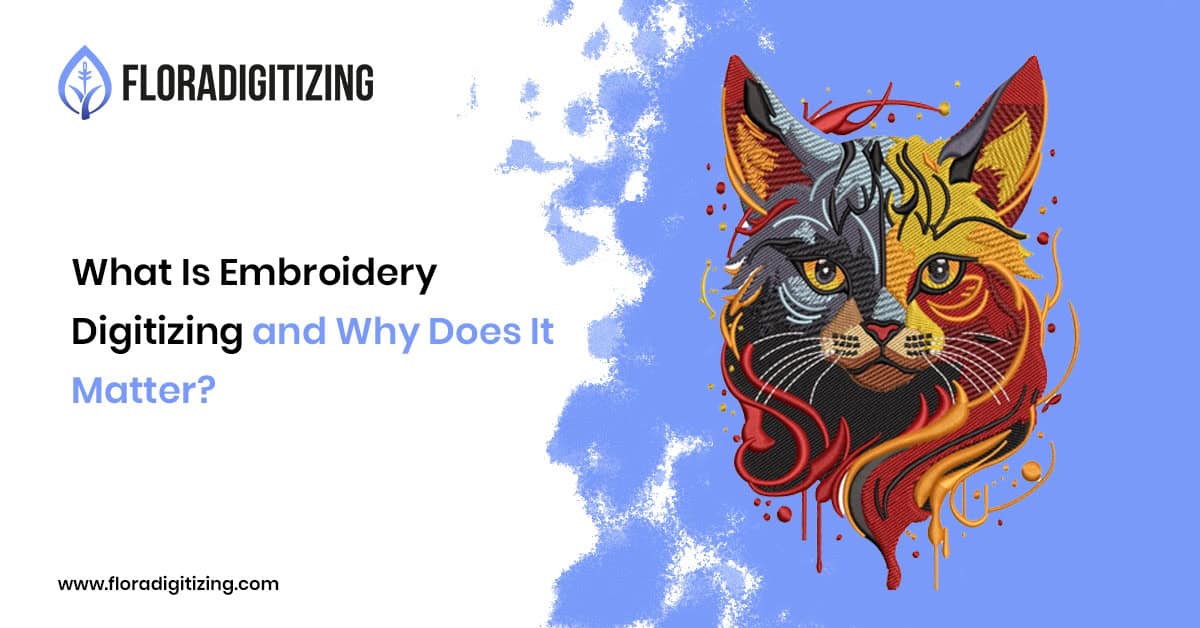
Embroidery looks simple on the surface, but producing clean, professional stitching requires much more than uploading a logo to an embroidery machine. Many apparel brands, embroidery shops, and promotional product businesses struggle with thread breaks, poor stitch quality, and distorted designs because their artwork was never properly digitized.
This is where embroidery digitizing services become essential.
In this guide, you’ll learn what embroidery digitizing is, how it works, and why investing in professional digitizing can save time, reduce production errors, and improve the quality of every embroidered product.
What Is Embroidery Digitizing?
Embroidery digitizing is the process of converting artwork, logos, or images into a stitch file that an embroidery machine can read and sew.
Unlike standard graphic files such as JPG, PNG, or PDF, embroidery machines require specialized stitch instructions. A digitizer manually creates these instructions, determining:
- Stitch types
- Stitch direction
- Stitch density
- Underlay settings
- Pull compensation
- Thread sequence
The final output becomes one of the many Machine Embroidery Files formats such as DST, PES, EMB, EXP, or JEF.
Simply put, embroidery digitizing transforms artwork into embroidery-ready production files.
Why Embroidery Digitizing Matters
Better Embroidery Quality
A professionally digitized file ensures clean lettering, smooth curves, and accurate stitch placement.
Without proper digitizing:
- Small text becomes unreadable
- Designs may pucker fabric
- Thread breaks become common
- Logos lose detail
Professional digitizers understand how different fabrics react during stitching and adjust settings accordingly.
Reduced Production Errors
For embroidery businesses, production mistakes directly impact profits.
Using Professional Digitizing Services helps:
- Reduce machine downtime
- Minimize thread breaks
- Improve first-run accuracy
- Lower material waste
- Increase customer satisfaction
A high-quality digitized file often eliminates costly re-runs.
How the Embroidery Digitizing Process Works
Step 1: Artwork Review
The digitizer evaluates the logo or design to determine the best stitch strategy.
Step 2: Stitch Mapping
Each element is assigned specific stitch types such as:
- Satin stitches
- Fill stitches
- Running stitches
Step 3: Optimization
The design is adjusted for fabric behavior, stitch density, and machine performance.
Step 4: Testing
A sample sew-out verifies quality before delivery.
This process is why Custom Embroidery Digitizing requires expertise rather than automated software alone.
Common Types of Embroidery Digitizing Services
Different applications require different digitizing approaches.
Logo Digitizing Services
Businesses often need logos converted into embroidery-ready files for uniforms, corporate apparel, and promotional products.
Left Chest Logo Digitizing
One of the most requested services, Left Chest Logo Digitizing focuses on maintaining detail within a small embroidery area while ensuring readability.
Cap Digitizing Services
Caps have curved surfaces and center seams that require specialized stitch techniques. Professional Cap Digitizing Services help maintain logo accuracy and prevent distortion.
3D Puff Digitizing
Popular for premium hats and streetwear brands, 3D Puff Digitizing creates raised embroidery effects using foam under the stitches.
Jacket Back Digitizing
Large-format embroidery designs require advanced planning. Jacket Back Digitizing ensures proper stitch sequencing and coverage across larger embroidery fields.
PNG to Embroidery File Conversion: Why It Isn’t Automatic
Many customers assume a machine can stitch directly from a PNG image.
In reality, PNG to Embroidery File conversion requires manual digitizing. Software cannot automatically determine the best stitch path, density, or fabric compensation.
Professional Embroidery File Conversion ensures the artwork is optimized for actual production rather than simply converted.
When Should You Use Professional Embroidery Digitizing Services?
You should consider professional digitizing when:
- Launching a clothing brand
- Producing embroidered uniforms
- Creating promotional merchandise
- Scaling embroidery production
- Converting complex logos into stitch files
For businesses, investing in quality digitizing often delivers better long-term savings than repeatedly fixing poor embroidery results.
For reliable and production-ready solutions, businesses can explore expert embroidery digitizing services at https://floradigitizing.com/embroidery-digitizing/ and learn more about industry-leading branding solutions at https://floradigitizing.com/.
People Also Ask
Common formats include DST, PES, EMB, EXP, JEF, and VP3, depending on the machine brand.
Can any image be converted into embroidery?
Yes, but the design often requires adjustments to ensure stitch quality and readability.
How long does embroidery digitizing take?
Simple logos may take a few hours, while complex artwork can require additional time for testing and optimization.
Why is professional digitizing better than auto-digitizing?
Professional digitizers manually control stitch settings, resulting in cleaner embroidery, fewer machine issues, and better overall quality.
Conclusion
Embroidery digitizing is the foundation of successful machine embroidery. Whether you need Logo Digitizing Services, Cap Digitizing Services, 3D Puff Digitizing, or Jacket Back Digitizing, the quality of the stitch file directly impacts the final product.
Businesses that invest in professional digitizing achieve cleaner embroidery, fewer production issues, and stronger brand presentation.
If you’re looking for fast, accurate, and production-ready embroidery files, partnering with experienced digitizers can help you deliver exceptional results while keeping embroidery operations efficient and profitable.